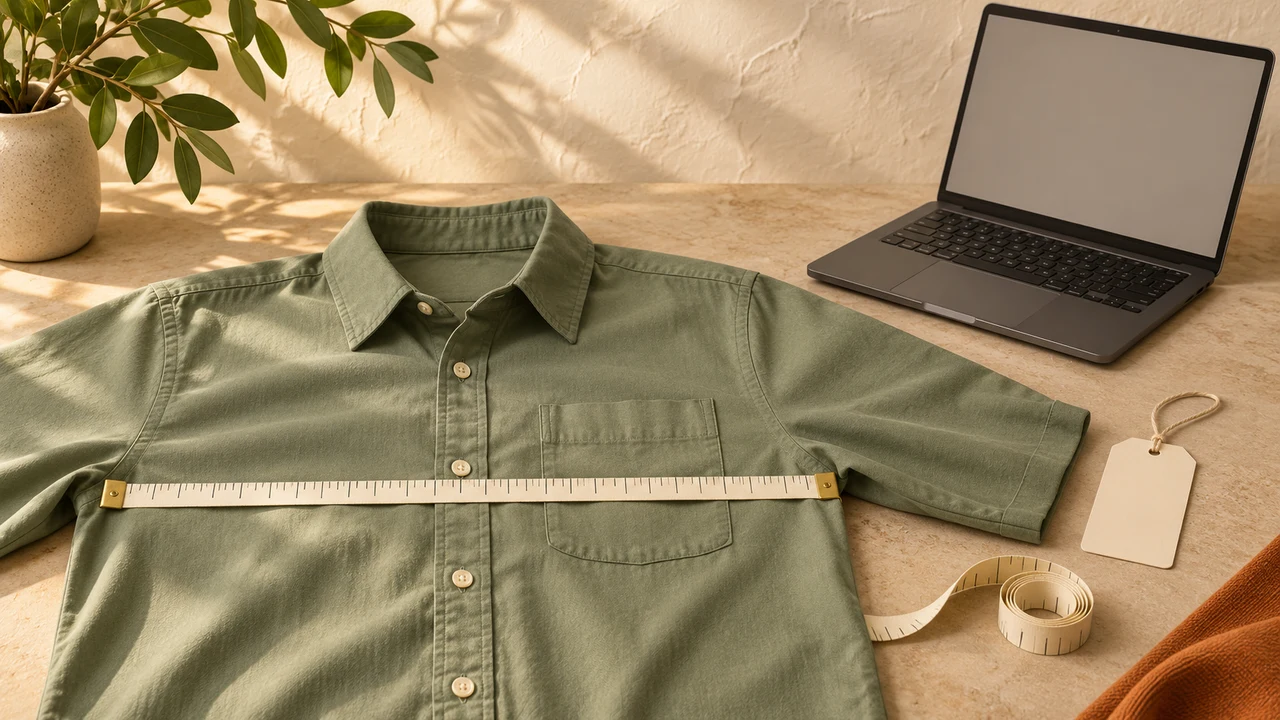
حرف المقاس وحده لا يكفي عند الانتقال بين الماركات أو القصات. خذ قياسات جسمك وفق التعليمات الموجودة في جدول القطعة نفسها، وحدد هل الجدول يعرض قياسات الجسم أم أبعاد الملابس. الخلط بينهما قد يجعل قطعة واسعة تبدو صغيرة أو العكس.
قارن الخيارات عمليًا
اقرأ وصف القصة: ضيقة أو عادية أو واسعة، والطول وطبيعة القماش. قارن بقطعة ترتاح لها من الفئة نفسها، لكن لا تستخدم قميصًا مرنًا مرجعًا لجاكيت غير قابل للتمدد. إذا وقعت بين مقاسين، اتبع تعليمات الماركة الخاصة بتلك القطعة بدل قاعدة عامة بأن الزيادة دائمًا أنسب.
قبل تأكيد الطلب
صور العارض تساعد في تصور القصة وليست مقياسًا لجسمك، خصوصًا إن كانت بيانات الطول والمقاس ناقصة. افحص أهلية الإرجاع قبل الطلب واحتفظ بالبطاقات حتى تتأكد من الملاءمة. يمكن أن تكون القطعة مناسبة للمقاس وغير مناسبة للحركة أو الاستخدام؛ جرّب الجلوس ورفع الذراعين دون إزالة الملصقات.
جدول القطعة المحددة
قياس الجسم أم أبعاد الملابس
القصة والتمدد والطول
إمكانية الإرجاع مع البطاقات
سجل قياساتك بطريقة مفيدة
احتفظ بقياسات حديثة مع تاريخها، لكن اقرأ جدول كل قطعة عند الطلب ولا تجعل القائمة بديلًا عنه. دوّن أيضًا ملاحظتك بعد تجربة مشترياتك: طول الكم، واتساع الكتف، وطريقة جلوس القماش. هذه الملاحظات تساعد في الطلب التالي من القصة نفسها أكثر من حفظ حرف المقاس وحده. وإذا تغير جسمك أو نوع الملابس، أعد القياس بدل الاعتماد على سجل قديم.
بصفتي مشارك لأمازون، فإنني أكسب من عمليات الشراء المؤهلة. لا نعرض سعر أمازون ولا صوره: السعر والتوفر في صفحة المنتج على أمازون وقت الشراء. لم يختبر WESH هذه المنتجات بنفسه؛ اخترناها لأن مواصفاتها المعلنة تطابق معايير الدليل.
حدود هذا الدليل
هذا دليل معايير، وليس اختبارًا معمليًا. WESH لم يختبر أي منتج بنفسه ولا يعرض نتائج قياس.
لا يذكر هذا الدليل سعرًا؛ السعر والتوفر والشحن والضريبة يحددها المتجر وقت الشراء.
المواصفات تتغير بين الإصدارات والأسواق. تحقق من صفحة المنتج لدى المتجر ومن ورقة المواصفات لدى الشركة المصنّعة قبل الشراء.
لا يقدم WESH توصية طبية أو هندسية ولا يضمن ملاءمة منتج لحالتك.
أسماء العلامات التجارية المذكورة تعود إلى أصحابها، وذكرها للتعريف بالفئة فقط ولا يعني اعتمادًا أو شراكة.
A size letter is not enough when changing brands or cuts. Measure according to the instructions on the item’s own chart, and establish whether the figures describe the body or the garment. Confusing the two can make a loose garment look undersized on paper.
Compare the options
Read the fit description, length and fabric information. Compare with a comfortable garment of the same type, but do not use a stretchy T-shirt as the reference for a rigid jacket. If between sizes, follow the brand’s advice for that item rather than assuming that sizing up always works.
Before confirming the order
Model photographs suggest silhouette but do not measure your body, especially when height and worn size are missing. Check return eligibility and retain tags until fit is confirmed. A garment can match a measurement yet restrict movement; assess sitting and raising your arms without removing labels.
The exact item’s chart
Body or garment measurements
Cut, stretch and length
Return eligibility with tags
Keep measurements you can reuse
Keep dated measurements, but still read the chart for each item. After trying a purchase, note sleeve length, shoulder room and how the fabric hangs. Those observations can be more useful for another garment in the same cut than a saved size letter. Measure again when your body or clothing type changes, and distinguish actual fit notes from assumptions based on photographs.
As an Amazon Associate I earn from qualifying purchases. We show neither Amazon's price nor its pictures: price and availability are on the Amazon product page at the time you buy. WESH has not tested these products; they are listed because their declared specifications match this guide's criteria.
Limits of this guide
This is a criteria guide, not a laboratory test. WESH has not tested any product itself and reports no measurements.
No price appears here. Price, availability, shipping and tax are set by the merchant at checkout.
Specifications change between revisions and markets. Check the merchant product page and the manufacturer spec sheet before buying.
WESH gives no medical or engineering recommendation and does not warrant that a product suits your case.
Brand names are the property of their owners and are used to identify a category, not to imply endorsement or partnership.